How to Hire a Remodeling Contractor in California (and Avoid the Horror Stories)
The questions to ask, documents to check and red flags to watch for before you sign with a remodeling contractor in Los Angeles or the Bay Area.
Almost everyone has heard a remodeling horror story: the contractor who disappeared mid-job, the permit that was never pulled, the shower that leaked six months later. The good news is that most of those stories are preventable with a little homework before you sign.
 Illustration
1. Verify the license — yourself
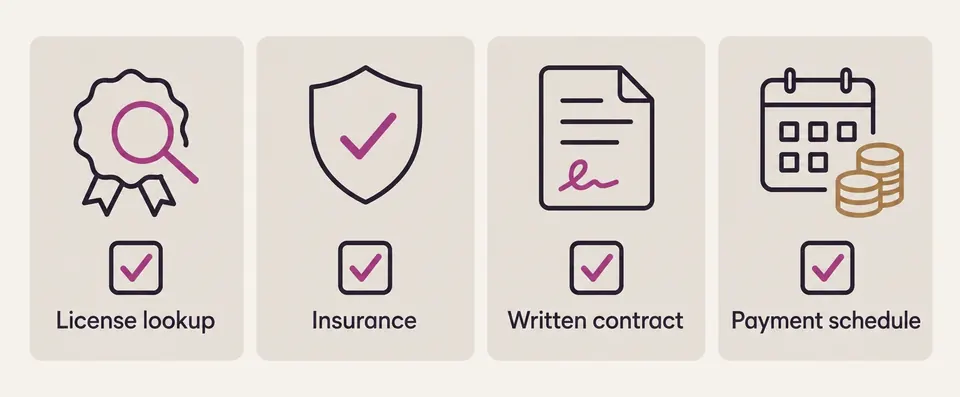
In California, a contractor must be licensed by the Contractors State License Board (CSLB) for any job of $1,000 or more — and for a smaller job too if it needs a permit or the contractor uses hired workers. Don't take a license number on faith: look it up with CSLB's Check a License tool (opens in new tab), where you can search by license number, business name or the name of a person on the license. Check that:
- the license is active,
- the classification fits the work (a general building contractor, "B," for remodels and additions),
- a contractor's bond is on file, and
- workers' compensation coverage is on file if they have employees.
Tulip Remodeling's license is CSLB #1059213 — you can verify our license on the CSLB website (opens in new tab).
2. Ask who actually runs the job
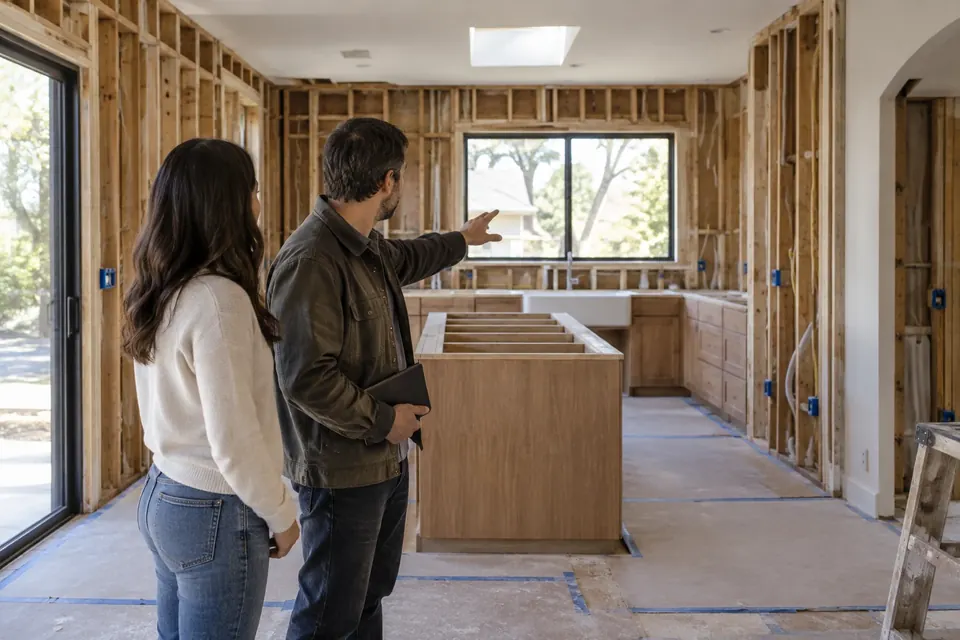
Some companies sell the project and hand it to a rotating cast of subcontractors with nobody in charge on site. Ask directly:
 Illustration
- Who will be on site day to day?
- Who do I call with a question, and how fast will they answer?
- Who coordinates the plumber, electrician and inspector?
You want a clear name and a clear process.
3. Get a written estimate and contract
A good estimate spells out the price, the timeline, what's included and excluded, and lists allowances for things you haven't picked yet. The contract should include a payment schedule tied to progress, the start date and approximate completion, and how change orders are handled. In California, a home improvement contract over $500 must be in writing.
 Illustration
California also limits the down payment on a home improvement contract to $1,000 or 10% of the contract price, whichever is less (CSLB: Learn About Home Improvement Contracts (opens in new tab)). After that, payments shouldn't run ahead of the job: CSLB says they should be based on work already completed or materials delivered to your home. Be wary of anyone asking for a large deposit up front.
4. Make sure permits are part of the scope
If the work touches structure, plumbing, electrical, gas or HVAC, it almost certainly needs a permit. Unpermitted work can cause problems with insurance, resale and safety. A professional contractor pulls the permits, schedules the inspections and meets the inspector.
5. Look at real work and real reviews
Ask for photos of completed projects similar to yours, including before-and-after shots and work in progress. Read reviews on platforms where the business can't hand-pick what's shown, and look for patterns in how problems were handled — every contractor has an occasional issue, and the good ones own it.
6. Watch for red flags
- Pressure to sign today or "lock in" a special price
- A bid dramatically lower than everyone else's
- Cash-only payment or a large deposit
- Vague scopes like "remodel kitchen — $X"
- Reluctance to pull permits
- Nobody can tell you who supervises the job
What working with Tulip looks like
We're a licensed, bonded and insured California general contractor, founded in 2019, with a team that brings more than 20 years of remodeling experience. Every project gets a written price and timeline, then a contract, design assistance with 3D renderings, permits and inspections handled by our office, and on-site supervision from start to finish. When something comes up, we tell you what we found and how we'll fix it.
If you're interviewing contractors, we'd be glad to be one of them. Book a consultation and bring your toughest questions.
Next steps
Sources
- Contractors State License Board (CSLB), Check a Contractor License (opens in new tab)
- CSLB, Learn About Home Improvement Contracts (opens in new tab) — down payment limit; written contracts for home improvement work over $500
- CSLB, Important Contract and Payment Rules (PDF) (opens in new tab) — down payment limit and progress payments; applies to all home improvement projects
- CSLB, License Requirement for Minor Work Increases from $500 to $1,000 (industry bulletin, December 31, 2024) (opens in new tab)